How the Energy Revolution System Works
Electromagnetic induction, the generate-store-deliver chain, and the measurements that show whether a build produces real power.
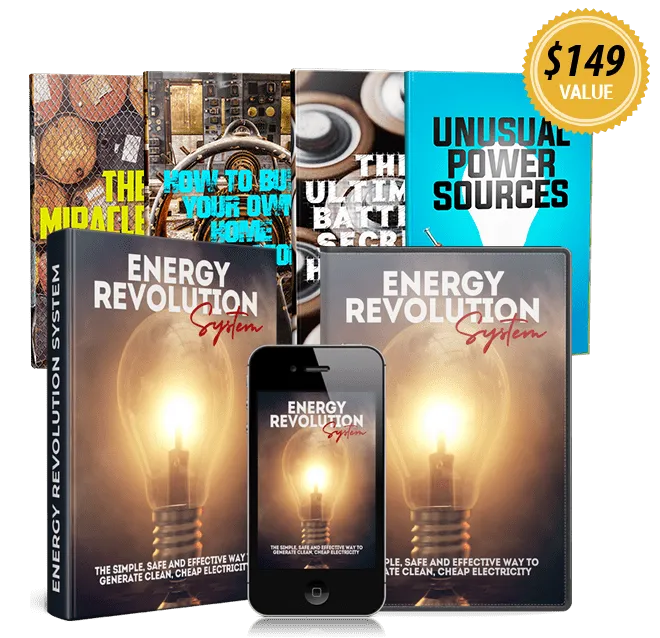
The Energy Revolution System is a digital do-it-yourself guide for homeowners who want to understand, and experiment with, producing some of their own electricity. As household electricity costs get more attention across the United States, it offers a hands-on alternative to relying only on the grid: illustrated blueprints, wiring diagrams, a materials checklist and step-by-step assembly guidance for an experimental generator design inspired by electromagnetic induction and Nikola Tesla’s work.
The Energy Revolution System guide is written to keep things simple, explaining component selection, energy conversion, battery storage and project planning in plain language. It is a downloadable manual, not a ready-made generator: parts are bought separately, and the design still needs an external energy source to produce electricity.
Whether you want to understand your utility bill, prepare for power outages or learn more about home energy, the guide gives you a structured project to work through. Its electricity output and any savings have not been independently verified, so compare any claimed figure with your own electricity use before you buy.
The product details below are based on the seller’s descriptions. The electrical principles are explained separately using educational sources; they do not establish the performance of this particular design.
This information is educational and is not engineering, financial or legal advice.
This is a hands-on build involving wiring, batteries and an inverter. If you are not confident using a multimeter and following local electrical codes, budget for help from a qualified electrician.
Treat the guide as an educational DIY project. Output and savings depend on your build and have not been independently verified, so compare any claimed figure with your own electricity bill.
The 60-day money-back guarantee is handled by the retailer that processes your payment. Keep your order confirmation email and decide within the refund window.
What you receive: the vendor describes a downloadable package covering project preparation, component selection, assembly, troubleshooting and maintenance. Use the diagrams and parts checklist to assess the scope of the project before purchasing equipment.
The guide price does not cover hardware, tools or professional installation. Confirm the exact files, included resources and support terms on the seller’s checkout page.
According to the seller’s materials, Michael Garnett is presented as the creator of the guide and a self-taught inventor interested in Nikola Tesla’s coil and resonance concepts. His biography and credentials come from the seller and have not been independently verified. The stated aim is to make electrical concepts accessible through illustrated documentation.

The guide describes a sequence of generation, conditioning, storage and delivery. Utility power follows a broadly comparable generation-to-distribution path at a much larger scale. This analogy does not establish the output of the DIY device; a coil requires an external energy source.
For the underlying physics and measurement methods, see how a DIY coil generator converts and measures energy.

The guide discusses electromagnetic induction, coil design, resonance and circuit conditioning. These are established electrical concepts, not evidence that the proposed design can produce net energy without a separate energy input. Lenz’s law explains why induced current opposes the change in magnetic flux that produces it. A coil or feedback circuit cannot generate net energy on its own.
Follow local electrical codes and seek qualified help for electrical work.

The manual describes a staged build, from parts selection to inspection and testing. This overview is not a substitute for verified electrical instructions or professional supervision.
Before using any device, obtain a qualified safety assessment. See our DIY electrical safety and testing checklist for precautions.

This guide may suit readers interested in DIY energy experiments who are willing to source parts and obtain qualified help. It is not a dependable substitute for a proven backup system or a guaranteed way to lower bills.

The guide’s parts list centres on the components below. The descriptions summarize the seller’s design; they are not measured results.
Planning a build? Our materials and tools planning guide covers the ratings to check, the test equipment involved, and how to budget a complete project before buying parts.

The vendor promotes several potential benefits. Treat these as intended features, not verified performance outcomes.
To check any savings figure against your own bill, use our step-by-step guide to kWh and electricity savings calculations.


The seller lists the following features of the digital package:
The vendor attributes the design to Michael Garnett’s experiments with Tesla-inspired coils. The following development history is the seller’s account, not independently verified.

The retailer advertises a 60-day money-back guarantee. Check the exact refund terms at checkout; expenses for parts or labor may not be covered.
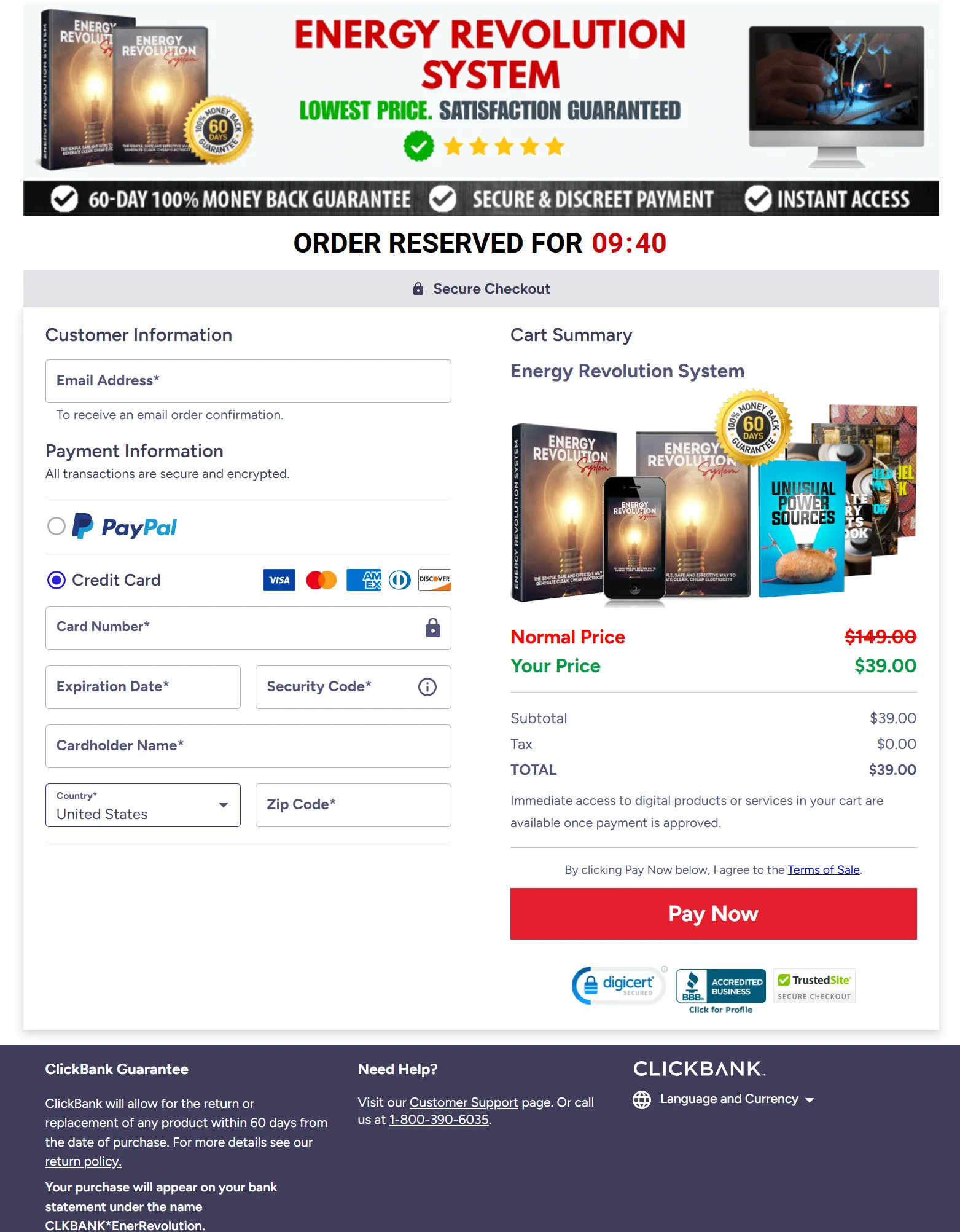
Use the purchase link to visit the seller’s offer and check the current price, package contents and refund terms before placing your order.
Save the order confirmation and download instructions. Contact the retailer through the details provided with your purchase if access or refunds are an issue.
Customer experiences can help readers understand the documentation and difficulty of a project. Testimonials and ratings alone do not establish how much energy a device produces. This page does not publish unverified customer testimonials or star ratings.
Distinguish feedback about the manual from evidence about the finished device. Clear diagrams and accessible explanations are useful, but reliable performance evidence requires measurements of energy input and usable output.
Look for documented builds with identifiable components, operating conditions, measurement methods and a clear account of total costs.
The seller describes the Energy Revolution System as a downloadable educational product with a stated 60-day refund policy. A digital product’s availability is separate from whether its performance claims are substantiated. Confirm the seller, what is included and the refund terms before paying.
What the seller documents:
What remains unverified:
Our view: treat it as an educational DIY blueprint priced like one, not as a guaranteed route to cutting your power bill. If you are buying on the strength of the 80% figure, that is the wrong reason to buy. If you want a structured introduction to building a small home energy project and you are comfortable with the refund window as your safety net, the purchase is defensible.
The guide describes a build based on electromagnetic induction, which is well-established physics. What has not been independently shown is how much usable power this particular design produces, or what keeps it running. We have seen no independent test data, so treat the vendor's performance descriptions as claims.
It helps to separate three different questions:
Is it worth it? A reasonable test: if the guide were sold purely as an educational DIY course on building a small energy project — no savings claims at all — would you still want it at this price? If yes, the purchase makes sense. If the appeal rests entirely on the bill-reduction figure, we would not recommend buying on that basis, because that figure is the part we cannot verify.
Results also vary more than most buyers expect. Coil winding accuracy, component quality, battery condition and inverter efficiency all compound. Two people following identical instructions can end up with noticeably different output.
The seller offers the guide as a digital download, not a boxed generator. The listed price is $39, subject to confirmation at checkout. Use the purchase link to check the seller’s current offer and the exact terms.
One practical warning: several near-identical domains use misspellings of the product name. Check the address bar before entering payment details, and be wary of any page asking for card details outside the retailer’s encrypted checkout.
Compared with the main alternatives, the Energy Revolution System has the lowest upfront price, before parts, and is the most hands-on. It is not the highest-output option, and it is not the right choice if you want something that simply works out of the box.
An honest summary: this is best understood as a low-cost educational alternative for someone who wants to learn by building, not as a replacement for solar or a commercial battery system. For a fuller breakdown of generation versus storage, installation and running costs, read our comparison with solar panels and battery backup.
Explore these educational guides to understand electrical principles, plan materials and costs, compare energy options, and learn about safety considerations.
Electromagnetic induction, the generate-store-deliver chain, and the measurements that show whether a build produces real power.
Component categories, ratings to check, test equipment, and how to budget a complete project before buying parts.
Turn watts into kilowatt-hours, read your own bill, and test any savings claim against real numbers.
Generation versus storage, installation, maintenance and cost, matched to the problem you actually want to solve.
Hazards, grounding and fusing basics, safe measurement practice, and when to bring in a qualified electrician.
The seller says the guide is written for beginners, with illustrated instructions and wiring diagrams. The build still involves wiring, batteries and an inverter, so plan for qualified help if you lack electrical experience.
The amount of time required depends on your previous DIY experience, project preparation, and the availability of recommended materials.
No. It is a digital guide. Components, tools and any professional assistance must be arranged separately.
No. Figures such as "up to 80% savings" come from the seller’s sales presentation and are not guaranteed. Actual results depend on your build quality, components, usage, and local energy costs.
The guide describes a modular approach for adding components later. Check that any addition is compatible and correctly rated.
Mainly its format: ordered build steps, a parts list with substitutions and illustrated wiring diagrams in one guide. The underlying electrical concepts are standard, and free DIY coil plans also exist.
The seller states a 60-day money-back guarantee, subject to its published refund policy.
Use any purchase button on this page to go to the seller’s secure checkout. After payment, you receive instructions for accessing the digital guide.
Digitally. According to the seller, the guide and included resources are available online after purchase.
The seller says support is available for access problems and general questions about the guide. Use the contact details in your order confirmation.
Digital guide — listed price $39. Check the seller’s current checkout price and included resources before ordering. The product is delivered digitally according to the seller’s offer.
The guide is intended for learning and project planning. Budget separately for components, tools and qualified electrical assistance. It is not a tested substitute for a certified backup power system.
The seller lists additional resources and a 60-day refund window. Confirm the exact package and refund conditions at checkout; hardware and labor costs may not be covered.
Digital access — follow your order confirmation.
Project planning — assess costs and safety before buying parts.